




Mirror Screen Technology, often referred to as Mirrorvision, is a hybrid display solution that combines a functional mirror with a digital screen. When inactive, the surface behaves like a conventional mirror. When content is displayed, it becomes an information or visual interface without changing the physical structure.
This approach is widely used in retail, hospitality, residential design, and commercial interiors where reflection is already part of the space. Instead of adding new screens, Mirrorvision integrates digital content into an existing visual element.
While mirror screens are sometimes associated with novelty, their practical value lies in controlled integration. This article explains how Mirror Screen Technology works, where it performs best, and when it may not be the right solution for a project.
How Mirror Screen Technology Works
Mirror Screen Technology is most effective in environments where mirrors already serve a functional role, such as fitting rooms, hotel bathrooms, and beauty counters. Understanding the underlying structure helps clarify why performance depends heavily on lighting and optical balance.
The core structure behind Mirrorvision displays
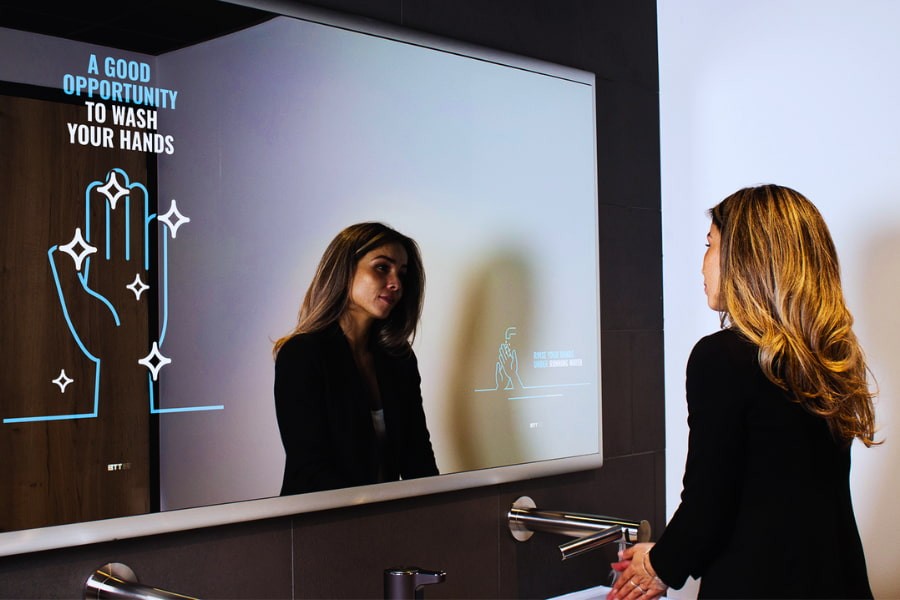
A Mirror Screen system places a specially engineered optical mirror glass in front of a display panel, typically an LCD or LED backlit screen.
- When the display is off, the glass reflects ambient light and functions as a standard mirror
- When the display is on, light from the screen passes through the glass and becomes visible to the viewer
This controlled interaction between reflection and transmission allows digital information and reflection to share a single surface without visual conflict.
Mirror mode vs display mode
The mirror effect does not come from software switching. It is defined by the optical properties of the glass.
- Reflection dominates when the screen is inactive
- Emitted light becomes visible only when screen brightness exceeds ambient reflection
Because of this relationship, lighting conditions play a critical role in perceived clarity.
Why the screen looks like a mirror when turned off
Mirrorvision systems rely on optical mirror glass rather than standard household mirrors. The glass reflects a calibrated percentage of light, allowing it to behave like a mirror until internal illumination is introduced.
This design explains why mirror screens perform best indoors, where lighting levels can be predicted and controlled.
The Key Components Behind a Mirror Screen
Optical mirror glass
Mirror Screen systems use dielectric mirror glass, not silver-coated mirrors.
This glass is manufactured by depositing multiple nano-scale dielectric layers onto a glass substrate. Each layer influences how much light is reflected and how much is transmitted.
Key characteristics include:
- Tunable reflectivity and transmission ratios
- High optical consistency across the surface
- Compatibility with safety treatments such as tempering
High reflectivity is suitable for fitting rooms and cosmetic mirrors. Balanced transmission works better for advertising or informational content.
Display technologies used in mirror screens
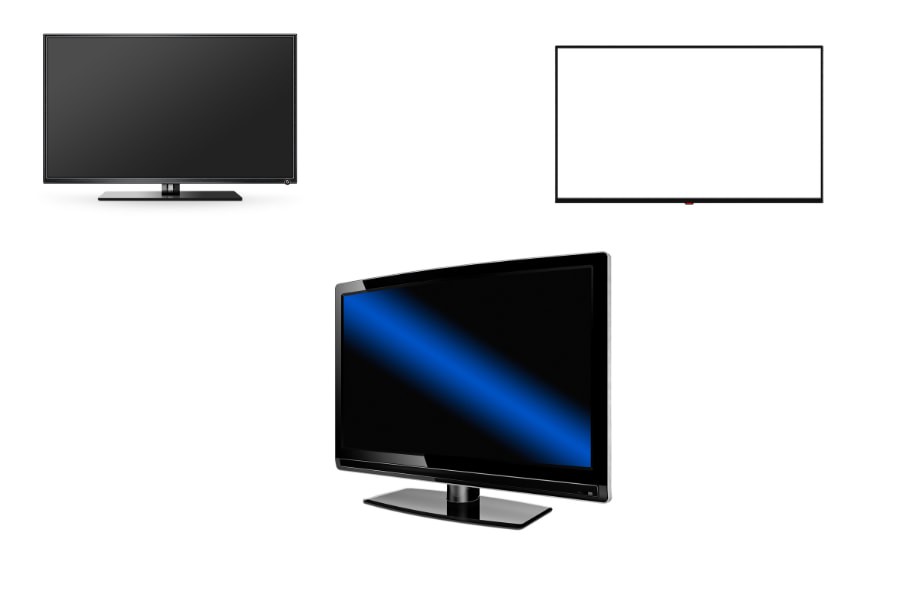
Most commercial Mirror Screen installations use LCD or LED backlit displays. These technologies offer stable performance, cost efficiency, and wide size availability.
OLED displays are emerging as a future option. Because OLED pixels emit light independently and fully turn off when displaying black, they can provide:
- Cleaner mirror appearance with minimal light haze
- Higher contrast and deeper blacks
- Greater design flexibility through ultra-thin or curved formats
At present, OLED mirror screens are best suited for premium or experimental installations. Commercial availability remains limited, and current costs restrict large-scale deployment.
How Content Is Delivered to a Mirror Screen
Content delivery depends on system configuration rather than mirror technology itself.
Most mirror screens are driven by:
- External computers or media players
- Single-board controllers
- Integrated TV tuners in Mirror TV formats
HDMI input, USB plug-and-play, and network-based content management are commonly supported. This allows content updates to scale without altering the physical installation.
Mirror Screen Formats and System Options
Common mirror screen formats
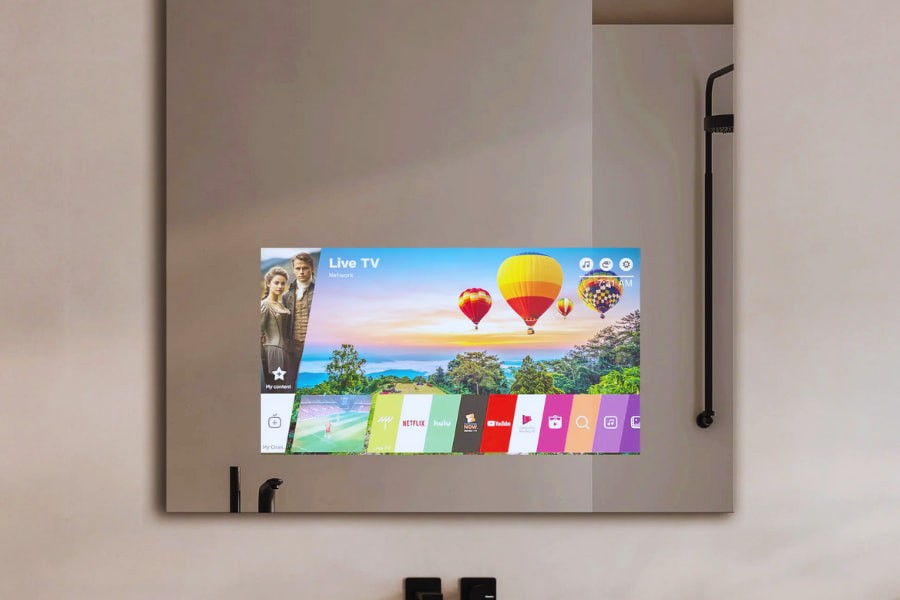
Mirror TV
An all-in-one unit that switches between mirror and television modes. Common in residential spaces, hotels, and private lounges.
Mirror overlays and DIY kits
Optical mirror panels designed to retrofit existing screens. Often used for upgrades or renovation projects.
Interactive touch mirrors
Integrated with infrared or capacitive touch layers. Widely used in retail fitting rooms, beauty counters, and brand showrooms.
Large custom installations
Including mirror video walls, oversized formats, and shaped designs. Applied in shopping malls, flagship stores, and architectural features.
Key specifications that define performance and appearance
Mirror Screen systems are typically customized to project requirements.
- Reflectivity levels range from standard to ultra-high
- Sizes span from small tablets to multi-panel video walls
- Landscape, portrait, and square formats are supported
- Wall-mounted and freestanding structures are common
- HDMI and USB are standard, with optional media players
These variables determine how well the mirror integrates visually and functionally into a space.
Where Mirror Screen Technology Makes Sense
Mirror screens are not a universal replacement for standard displays or mirrors. They deliver the best results in controlled environments where reflection already serves a purpose and viewing distance is short.
Retail and fitting room applications
Mirror Screen Technology supports decision-making at the point of purchase.
- Virtual try-on systems overlay clothing or accessories
- Product details and styling guidance appear directly on the mirror
This reduces decision time, improves engagement, and supports more confident purchases.
Hair, beauty, and fitness use cases
In salons and studios, mirrors are already central to the user experience.
Mirror screens allow guidance, training content, or product information to appear while clients view themselves. During idle periods, the same surface functions as a digital communication channel.
The result is a cleaner workspace with fewer standalone screens.
Using mirror screens in interior design
Mirror displays combine functional and spatial roles.
By merging two objects into one, they reduce visual clutter and help preserve clean interior lines. When inactive, the display disappears into the design language of the room.
In smart environments, mirror screens can also act as information hubs for daily updates or connected systems.
Hospitality and dining environments
In hospitality settings, mirror screens support atmosphere and communication at the same time.
Menus, welcome messages, or ambient visuals can appear without introducing visible signage. This maintains a refined environment while keeping guests informed.
What to Consider Before Choosing a Mirror Screen
Choosing a mirror screen is less about selecting a panel and more about matching optical performance to the installation environment. Poor alignment between lighting conditions and reflectivity can significantly reduce usability.
Key factors that affect performance and cost
Successful projects begin with clear intent.
- Define whether the goal is decoration, information, interaction, or integration
- Evaluate ambient light levels and viewing distance
- Decide if touch or advanced interaction is required
- Plan content sources, formats, and update frequency
- Balance initial investment with long-term maintenance
Each factor directly influences glass selection, brightness requirements, and system design.
The Future of Mirror Screens – How OLED Fits Into the Picture
OLED mirror screens represent a clear technical direction rather than a current standard.
They offer the closest balance between mirror purity and display performance. They also enable new design possibilities such as curved or ultra-thin mirror displays.
For most projects today, LCD and LED-based mirror systems remain the most reliable and economical choice. OLED is best reserved for premium installations where visual impact outweighs cost considerations.
FAQ
Q1: Does mirror mode reduce display clarity?
High-quality dielectric mirror glass balances reflection and light transmission. When the display is active, content remains clear and readable. A faint reflection may still be visible, but this layered effect is intentional and does not significantly reduce clarity in properly designed installations.
Q2: Is installation complex?
Installation is similar to mounting a flat-panel display or architectural mirror. Professional installation is recommended to ensure structural safety, alignment, and clean cable routing. Smaller mirror overlay kits can be installed by experienced users using standard mounting tools.
Q3: How should mirror screens be cleaned?
Use a soft microfiber cloth with a non-abrasive screen cleaner. Avoid alcohol, ammonia-based products, or spraying liquid directly onto the surface. Proper cleaning preserves optical coatings and prevents damage to the mirror glass.
Q4: Can mirror screens be used outdoors?
Most mirror screen systems are designed for indoor use. Outdoor applications require high-brightness displays, weather-sealed enclosures, and appropriate IP ratings. Without these measures, mirror performance and display reliability are compromised.
Q5: Is it worth waiting for OLED mirror screens?
OLED mirror screens offer higher contrast and cleaner mirror performance, but commercial availability remains limited and costs are high. For most projects, mature LCD and LED mirror solutions provide a more practical and reliable option today.
Q6: What technology is used in mirror screen and smart mirror displays?
Mirror screens combine optical dielectric mirror glass with LCD, LED, or emerging OLED displays. The technology focuses on controlling reflection and light transmission. Smart functions are added separately through media players or external control systems.
A Practical Approach to Mirror Display Solutions
RUSINDISPLAY delivers professional OLED and Transparent Display solutions with rapid 3D scene creation, reliable performance, and support from over 120 global brands. Our systems help businesses improve spatial efficiency and visual communication while maintaining long-term technical stability. With AI-driven interaction and a Tech in Nature design philosophy, we create display solutions that integrate naturally into modern commercial environments.