




Introduction – What Makes Transparent OLED Different
Transparent OLED, also known as T-OLED, is a specialized OLED technology where each pixel emits its own light. Unlike traditional LCD displays, Transparent OLED screens do not rely on a backlight, backbox, or filter layer.
Because the pixels are self-emissive, the screen can display digital content while remaining partially transparent. When powered off, the panel stays clear rather than turning dark. This allows digital visuals to coexist naturally with physical space, making Transparent OLED suitable for commercial environments that require both information display and spatial openness.

The Five Key Benefits of Transparent OLED Screens
1. Self-Emissive OLED Design Delivers Clear and Accurate Images
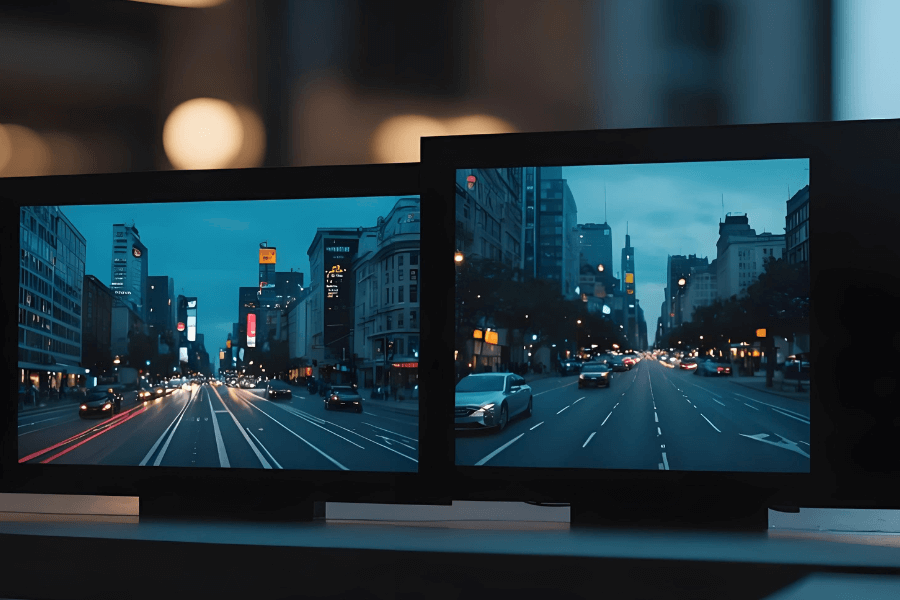
Self-emissive pixels are the foundation of OLED technology. Each pixel controls its own brightness and color independently, without relying on a backlight.
This structure allows inactive pixels to fully turn off, producing true black and significantly improving contrast. Without color filters, light loss is reduced, helping maintain consistent color accuracy across different content types.
Transparent OLED panels also provide wide viewing angles of up to 178 degrees. Content remains stable when viewed from different positions, which is important in public and shared viewing environments. Many systems can adjust brightness and color temperature based on ambient light, supporting comfortable visibility throughout the day.
2. True Transparency Preserves Space and Visibility
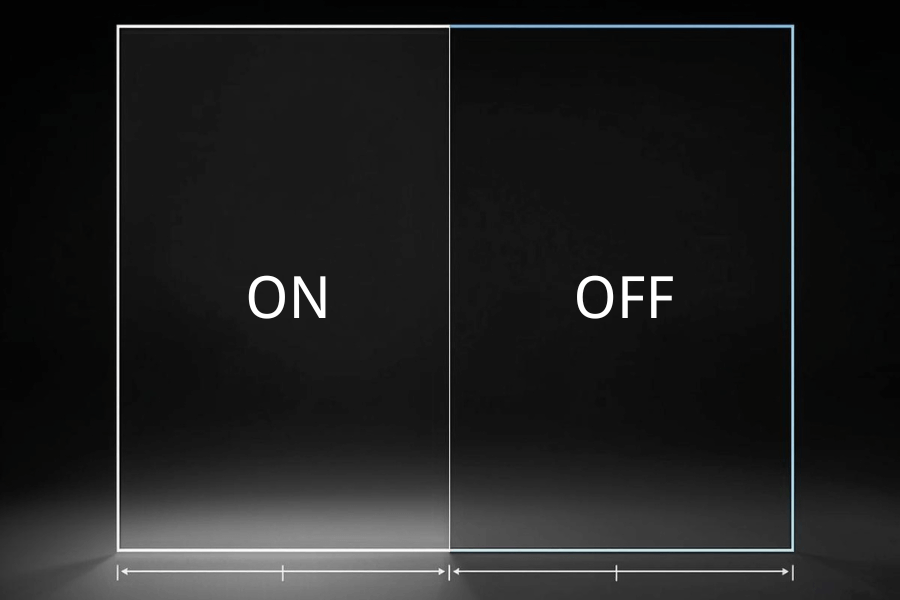
Unlike Transparent LCD displays, Transparent OLED screens remain transparent even when powered off. The panel does not appear dark or blocked when inactive.
Commercial Transparent OLED panels typically offer transparency levels between 38 and 45 percent. This allows viewers to clearly see products, architectural elements, or exhibits behind the screen.
Because the panel does not block light or sightlines, it integrates smoothly into windows, glass walls, and display cases. Digital content and physical objects share the same visual plane, enabling clear communication without disrupting the surrounding space.
3. Slim Structure Supports Flexible Installation and Design Freedom
The absence of a backlight system allows Transparent OLED screens to remain thin and lightweight. This directly expands installation possibilities.
Panels can be suspended, embedded into glass structures, or combined into larger display surfaces using modular configurations. Reduced weight lowers structural requirements, making integration easier in existing commercial spaces.
OLED manufacturing also allows a degree of form flexibility. Transparent OLED panels can be adapted into curved or customized layouts, giving designers greater freedom in retail, exhibition, and architectural applications.
4. Optional Touch and Interaction Enable Layered Experiences
Transparent OLED screens can be paired with infrared or PCAP touch overlays to enable interactive functionality. Touch performance remains accurate without reducing transparency.
Interactive Transparent OLED displays are commonly used for smart mirrors, retail product exploration, and experiential brand installations. Digital information appears layered over physical objects, creating depth rather than visual separation.
This interaction model supports emerging augmented display concepts, where digital content enhances the physical environment instead of replacing it.
5. Efficient Power Use With Stable Long-Term Performance
OLED technology converts electrical energy directly into light at the pixel level. Without a backlight, overall power consumption is typically lower than that of traditional LCD displays.
Modern Transparent OLED panels are generally rated for more than 30,000 hours of operation. Improvements in organic materials and encapsulation methods continue to extend durability and performance stability.
The solid-state structure also improves tolerance to temperature and humidity variations. Efficient heat management reduces thermal stress, supporting reliable operation in controlled indoor environments.
Where Transparent OLED Screens Are Commonly Used
Retail and Advertising
Transparent OLED screens are widely used in retail windows and display cabinets. Promotional content can be presented without blocking the view of physical products, preserving transparency while adding context.
Interactive installations further increase engagement by allowing customers to explore product information directly on the glass surface.
Exhibitions and Public Spaces
Museums and exhibition halls use Transparent OLED panels to provide contextual information without obstructing exhibits. In airports and transportation hubs, OLED displays deliver guidance while maintaining open sightlines.
Art installations also benefit from OLED transparency, allowing digital visuals to blend naturally with physical space.
Transportation and Architecture
Transparent OLED screens are increasingly integrated into vehicle interiors, glass partitions, and architectural features. In building applications, OLED technology supports smart glass concepts that combine daylight access with dynamic information display.
Automatic glass doors equipped with Transparent OLED panels turn transitional areas into functional communication surfaces.
Professional and Consumer Electronics
Transparent OLED technology is used in high-end professional display systems and concept devices. Its compact structure and visual clarity also support future consumer electronics that require innovative form factors and space-efficient design.
FAQ
Q1: How does a Transparent OLED screen work?
Transparent OLED screens use self-emissive pixels that generate light individually without a backlight. Active pixels display images when powered on. When powered off, the pixels become transparent and allow light to pass through, enabling both display and visibility.
Q2: What is the difference between Transparent OLED and Transparent LCD?
Transparent OLED screens do not require a backlight and remain transparent when inactive. Transparent LCD displays rely on backlighting and often appear dark when powered off. OLED technology also provides higher contrast and wider viewing angles.
Q3: What level of transparency do Transparent OLED screens offer?
Commercial Transparent OLED panels typically provide transparency between 38 and 45 percent. The exact level depends on panel structure and manufacturer, balancing visibility of background objects with readable digital content.
Q4: Can Transparent OLED screens support touch interaction?
Yes. Transparent OLED screens can support touch by adding infrared or PCAP touch overlays. These systems enable accurate multi-touch interaction without affecting transparency, making them suitable for smart mirrors and interactive displays.
Q5: What is the lifespan of Transparent OLED displays?
Most Transparent OLED panels are rated for more than 30,000 hours of operation. Ongoing improvements in materials and encapsulation continue to enhance lifespan and long-term reliability for commercial use.
Q6: Are Transparent OLED screens suitable for outdoor use?
Transparent OLED screens are primarily designed for indoor or controlled environments. Strong ambient light can reduce visibility. For full outdoor applications, LED-based transparent display technologies are generally more suitable.
Q7: Is Transparent OLED technology expensive?
Transparent OLED displays currently cost more than conventional display technologies due to complex manufacturing and lower production volumes. As production scales, costs are expected to decrease over time.
Q8: Can Transparent OLED screens be customized in shape or size?
OLED technology supports flexible substrates, allowing Transparent OLED screens to be produced in curved formats or customized sizes within technical limits. This flexibility supports diverse design requirements.
Q9: Do Transparent OLED screens require special maintenance?
Maintenance is similar to other premium displays. Regular cleaning, protection from dust and moisture, and adherence to manufacturer guidelines help ensure stable performance and long service life.
The Future of Transparent OLED in Commercial Displays
Transparent OLED represents an important advancement in display technology. By combining transparency with high image quality, it enables new ways of presenting information in retail, architecture, transportation, and professional environments.
As materials improve and production continues to scale, Transparent OLED technology is expected to support a broader range of applications. Its ability to integrate digital content into physical space will continue to shape functional and immersive visual communication.
About RUSINDISPLAY
RUSINDISPLAY delivers professional OLED and Transparent Display solutions with rapid 3D scene creation, reliable performance, and support from over 120 global brands. Our systems help businesses improve spatial communication and achieve practical ROI while benefiting from stable technical support and seamless after-sales service. Guided by a Tech in Nature design philosophy, we develop display solutions that integrate naturally into modern commercial environments.