




Introduction — Can Outdoor Projection Really Work in Daylight?
Sunlight is the biggest challenge for outdoor projection. Traditional projection systems struggle to remain visible under daylight conditions, especially in open or semi-open environments.
At the same time, advances in projector brightness, screen materials, and installation methods have made limited daytime outdoor projection possible. The key is choosing the right equipment and setting realistic expectations.
This article explains why daylight projection is difficult, how it can be optimized in controlled scenarios, and when alternative display technologies may offer a more reliable solution.
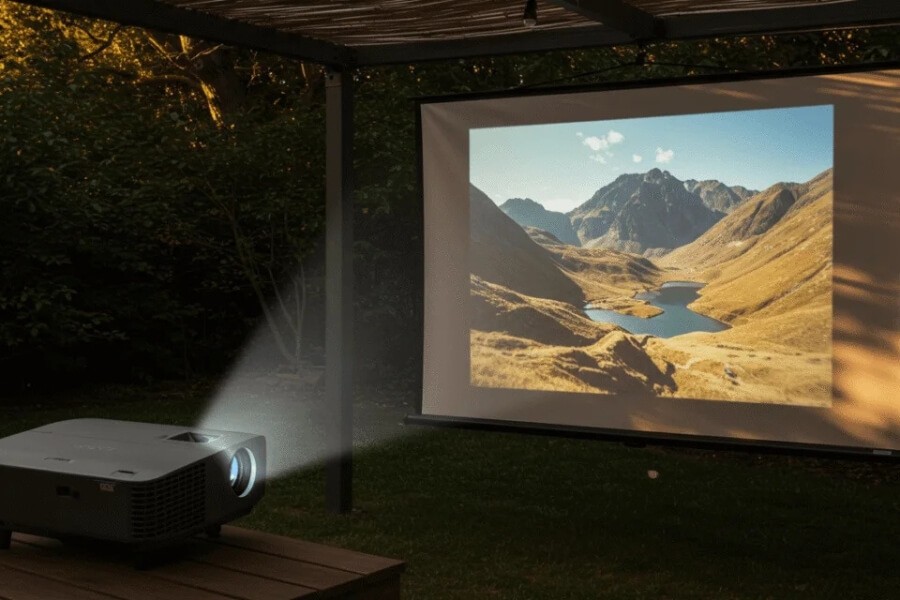
Why Daylight Makes Outdoor Projection Difficult
Daytime outdoor projection is constrained by basic optical and environmental factors. These limitations apply regardless of brand or projector model.
Sunlight Is Far Brighter Than Projection Output
Even on cloudy days, ambient light levels remain far higher than what a projector can deliver across a large surface. Projection relies on reflected light, while sunlight is a direct and powerful source.
As a result, projected images are easily washed out, losing contrast and detail.
Screen Reflection Works Against Projection
Standard projection screens often reflect more sunlight than projected light. When sunlight hits the screen surface, contrast drops sharply and images appear flat or unclear.
Outdoor Light Conditions Change Constantly
Cloud movement, shifting sun angles, and surrounding reflections cause rapid changes in brightness. These fluctuations make it difficult to maintain consistent image quality throughout the day.
Larger Screens Demand Exponentially More Brightness
As screen size increases, projected light spreads over a larger area. This sharply reduces perceived brightness per unit area, making large-format daytime projection especially challenging.
What Actually Improves Projection Visibility During the Day
While daylight projection has clear limits, certain technical choices can improve results in controlled environments.
High-Brightness Projectors Are Essential
Brightness is the most critical specification for daytime outdoor use.
- Minimum recommendation — around 4,000 lumens for small screens in shaded areas
- Ideal range — 8,000 lumens or higher for larger screens or brighter surroundings
- Choose projectors that support sustained high-brightness operation and stable thermal performance
Lower-lumen projectors may work only in heavily shaded locations or under overcast skies.
Use Screens Designed to Handle Ambient Light
Screen selection has a major impact on visibility.
- High-gain screens with a gain of 1.5 or above improve reflected brightness
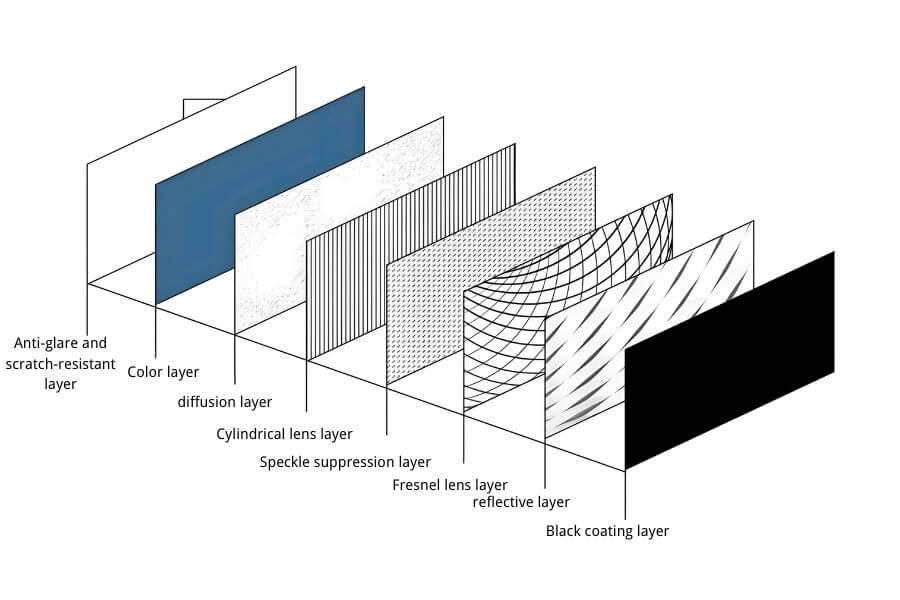
- Optical light-rejecting screens help deflect ambient light away from viewers
- Wide viewing angles, ideally 160 degrees or more, support flexible audience positioning
These screens reduce the impact of sunlight but do not eliminate it entirely.
Control the Environment Wherever Possible
Environmental control often matters more than hardware specifications.
- Prevent any direct sunlight from hitting the screen surface
- Install screens under canopies, trees, or building overhangs
- Use tents, sunshades, or temporary structures to create artificial shade
How to Set Up Outdoor Projection for Daytime Use
Choose the Right Time of Day
- Best conditions — early morning, late afternoon, or cloudy weather
- Avoid — midday hours between 11 a.m. and 2 p.m. when sunlight is strongest
- Ideal start time — one to two hours before sunset
Equipment Placement and Adjustment
- Position the projector so sunlight does not strike the lens
- Align the projector perpendicular to the screen for even brightness
- Secure the screen firmly to prevent movement caused by wind
- Increase contrast and saturation and select high-brightness display modes
Design Content for Daylight Viewing
- Use high-contrast color schemes such as light text on dark backgrounds
- Avoid dark scenes and fine details
- Increase font sizes and simplify graphics for long-distance visibility
What to Watch Out for When Using Projectors Outdoors
- Clean the screen regularly using neutral, non-abrasive cleaners
- Protect equipment from rain, dust, and direct heat exposure
- Use outdoor-rated power connections and secure all cables
- Suspend operation during strong winds, heavy rain, or extreme temperatures
Outdoor projection equipment is not designed for continuous exposure without proper protection.
When Projection Is Not Enough for Daytime Viewing
Even with high-brightness projectors and specialized screens, daytime outdoor projection remains sensitive to weather changes and ambient light. It also requires careful setup and frequent adjustment.
For projects that demand stable visibility, consistent contrast, and predictable performance throughout the day, self-emissive display technologies are often a better fit.
Why Transparent OLED Works Better in Bright Environments
Transparent OLED displays do not rely on reflected light. They deliver consistent brightness and contrast while maintaining visual openness, even in strong ambient light.
RUSINDISPLAY focuses on transparent OLED display systems designed for commercial spaces, exhibitions, and architectural environments where daylight visibility and spatial integration are equally important.
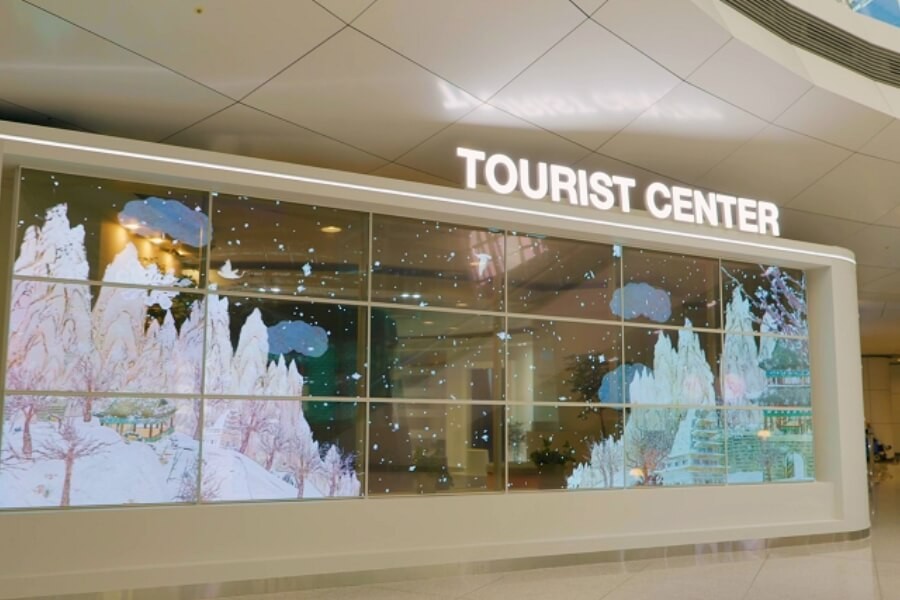
These systems support:
- Clear daytime visibility without the need for shading or light control
- Transparent structures that preserve natural light and architectural depth
- Interactive features, including touch, gesture control, and AI-driven visual responses
- Modular and customized configurations adapted to specific project requirements
For retail windows, exhibition halls, and commercial lobbies, transparent OLED provides a more predictable and visually integrated solution than daytime projection.
FAQ
Q1: How many lumens are required for daytime outdoor projection?
For daytime outdoor use, a projector should deliver at least 4,000 lumens in shaded conditions. For larger screens or brighter environments, 8,000 lumens or more is recommended. Actual requirements depend on screen size, ambient light levels, and how well direct sunlight can be controlled.
Q2: Do projector screens work in daylight?
Yes, but only under controlled conditions. Daylight projection requires high-brightness projectors paired with specialized screens, such as high-gain or light-rejecting surfaces. Even then, results depend heavily on shading, screen placement, and time of day rather than the screen alone.
Q3: Is outdoor projection better on cloudy days?
Yes. Cloud cover significantly reduces ambient light, which improves contrast and image visibility. Overcast conditions are often ideal for daytime projection compared to bright, sunny weather. However, proper screen selection and brightness levels are still necessary for consistent results.
Q4: Can a projector be left outdoors overnight?
No, unless it is installed in a professional weatherproof enclosure. Standard projectors are vulnerable to moisture, dust, and temperature changes. Leaving equipment outdoors without proper protection can shorten lifespan and increase the risk of permanent damage.
Q5: How can screen glare be reduced during the day?
Screen glare can be reduced by using anti-ambient-light or optical light-rejecting screens, positioning the screen away from direct sunlight, adding physical shading, and optimizing viewing angles. Environmental control is often more effective than increasing projector brightness alone.
Q6: Is all-day outdoor projection practical?
Generally no. Strong sunlight, changing weather, and fluctuating ambient light make all-day outdoor projection difficult to maintain. Daytime projection works best for limited time windows or controlled environments rather than continuous, full-day operation.
Choosing the Right Display for Daylight Environments
Daytime outdoor projection can work in carefully managed conditions, but it remains constrained by sunlight, screen size, and environmental variability. With the right equipment and setup, it can serve temporary or controlled-use scenarios.
For projects that require consistent daytime visibility, long-term reliability, and refined visual integration, transparent OLED and advanced display systems provide a more dependable approach.
RUSINDISPLAY delivers professional OLED and Transparent Display solutions designed for demanding daylight environments.
Our systems combine transparent display technology, interactive visual integration, and customized system design to support commercial spaces, exhibitions, and architectural projects worldwide. With rapid 3D scene creation, reliable performance, and experience supporting over 120 global brands, we help businesses create visually engaging spaces that remain clear and effective throughout the day. Our end-to-end solutions include hardware customization, content collaboration, and seamless technical support to ensure long-term stability and confident project delivery.