




In commercial display systems, image quality is not determined by the panel alone.
Behind every stable video wall, high-brightness signage system, or transparent OLED installation is a carefully designed display control architecture. The LCD controller and Driver IC define how content is processed, distributed, and physically rendered at the pixel level.
Understanding their roles helps project planners reduce risk, improve long-term reliability, and select the right system configuration.
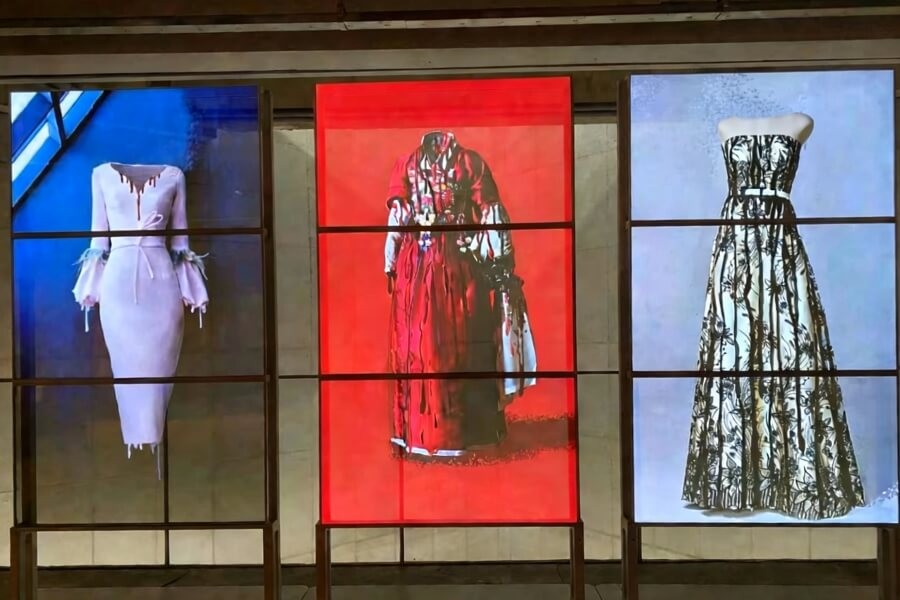
LCD Controller vs Driver IC — What They Actually Do in a Commercial Display System
Although often grouped together, an LCD controller and a Driver IC serve different functions within a display module.
LCD Controller — The System-Level Image Manager
The LCD controller processes image data from the host system and prepares it for display output.
It manages frame timing, signal formatting, image scaling, resolution mapping, multi-panel synchronization, and frame buffering through GDDRAM.
In large commercial installations, the controller ensures consistent signal distribution across multiple modules. Without proper controller architecture, image tearing, delay, or frame instability can occur in high-resolution video walls.
Driver IC — The Pixel-Level Voltage Regulator
The Driver IC converts digital image data into precise analog voltage signals that control individual pixels.
Each pixel’s brightness and color accuracy depend on voltage stability. In commercial environments, even minor voltage deviation can cause visible color shift between panels, grayscale inconsistency, and long-term brightness drift.
Driver precision directly affects uniformity, especially in tiled video walls and high-brightness retail displays.
Why Large Commercial Displays Require Dedicated Display Control Architecture
Basic microcontroller-driven displays are suitable for small embedded systems.
Commercial installations operate under different demands.
Higher resolution increases pixel count. Higher refresh rates increase data throughput. Higher brightness increases thermal and power requirements.
When resolution scales up, synchronization requirements increase accordingly. Without dedicated LCD controller and Driver IC architecture, processor overload, refresh instability, and panel mismatch become likely.
Professional commercial displays rely on independent display control systems to maintain performance stability.
How Display Controllers Enable Reliable Video Wall Performance
Video walls must function as a seamless visual surface across multiple panels.
Multi-Panel Synchronization
The controller distributes synchronized frame timing across panels.
Precise timing alignment prevents motion tearing, cross-panel lag, and visible seam inconsistencies. In control rooms and transportation hubs, synchronization errors are immediately noticeable.
Color Uniformity Across Panels
Uniform brightness and grayscale depend on stable Driver IC voltage output.
Consistent voltage ensures consistent gamma response across panels. This is critical in retail environments where brand color accuracy matters and in monitoring centers where data clarity is essential.
24/7 Operational Stability
Commercial video walls often operate continuously.
Driver IC thermal management reduces heat accumulation, voltage fluctuation, and brightness drift. Stable control architecture extends display lifespan and lowers maintenance frequency.
Why Driver IC Precision Is Critical in High-Brightness and Transparent Displays
High-brightness LCD systems require stronger current control to overcome ambient lighting.
Driver precision ensures that increased brightness does not introduce uneven luminance or color imbalance.
Transparent display systems introduce additional complexity. Higher light transmission reduces contrast margin. Voltage instability becomes more visually apparent.
Optimized Driver IC architecture ensures stable brightness, clear image definition, and balanced contrast in transparent installations, especially on glass façades and showroom windows.
Intelligent Display Control Is Reducing Operational Risk
Modern commercial display systems increasingly integrate intelligent control logic.
Advanced controller platforms support adaptive brightness adjustment, real-time color calibration, power optimization, and predictive monitoring of driver health.
This reduces operational risk in long-term deployments. In retail chains and airport networks, predictive monitoring lowers unexpected downtime and improves lifecycle management.
Display control is no longer limited to image rendering. It plays a central role in system stability and operational efficiency.
Selecting the Right Display Control Architecture for Your Commercial Project
Choosing the correct controller and Driver IC configuration depends on project requirements.
Consider screen resolution, Pixel Pitch, installation environment, continuous operating duration, brightness needs, and multi-panel expansion plans.
Retail environments prioritize visual impact and brightness. Control rooms prioritize long-term stability. Transparent installations require precise voltage control and light transmission balance.
Understanding display control architecture allows decision makers to align technical capability with operational goals.
FAQ
Q1: What is an LCD Driver IC?
An LCD Driver IC converts digital image data into precise voltage signals that control individual pixels. It directly influences brightness stability, color accuracy, and panel uniformity in commercial displays.
Q2: What is the difference between a controller and a driver?
The controller manages image processing and signal timing across the display system. The Driver IC regulates pixel-level voltage output to physically render the image on the panel surface.
Q3: Why are dedicated controllers important for video walls?
Video walls require synchronized frame timing, high data throughput, and consistent color performance across multiple panels. Dedicated controllers prevent signal delay, frame mismatch, and long-term instability.
Q4: What role does GDDRAM play?
GDDRAM stores frame data locally inside the controller. This enables continuous screen refresh without constant CPU communication, improving efficiency and maintaining stable display performance.
Q5: How does display control impact long-term reliability?
Stable controller and Driver IC architecture reduce heat accumulation, voltage fluctuation, and brightness drift. This extends display lifespan and lowers maintenance risk in commercial environments.
RUSINDISPLAY System Insight
At RUSINDISPLAY, we approach commercial display systems from a control architecture perspective rather than focusing on panels alone.
Transparent OLED installations, high-resolution Indoor LCD systems, and large-format video walls require optimized controller integration, voltage precision calibration, and scalable synchronization design to maintain consistent performance.
RUSINDISPLAY delivers professional OLED, Transparent Display, and Indoor LCD solutions with rapid 3D scene creation, reliable performance, and support from over 120 global brands. Our systems help businesses increase foot traffic and achieve fast ROI while enjoying steady technical support and seamless after-sales service. Whether implementing Transparent OLED installations or large-scale commercial LCD video walls, our solutions are engineered for stability, efficiency, and long-term operational reliability across diverse commercial environments.