




In many industrial and embedded applications, the display is designed for clarity and efficiency rather than visual impact. Choosing between a Segment LCD and a Monochrome Graphic LCD is often the first critical decision in system development. However, when projects evolve into commercial environments, display strategy must also evolve.
This guide explains how to evaluate Segment LCD versus Monochrome Display logically, and when commercial LCD, LED, or Transparent Display systems become the better solution.
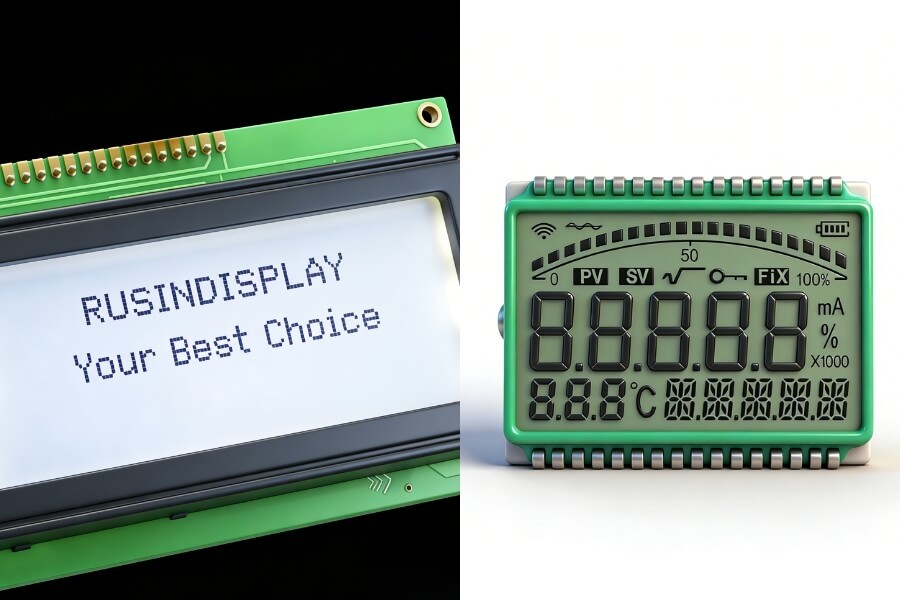
Segment LCD vs Monochrome Graphic LCD – Understanding the Structural Difference
A Segment LCD displays predefined numbers and icons using fixed electrode patterns embedded in the glass. The layout is determined during manufacturing and cannot be changed through software.
A Monochrome Graphic LCD uses a pixel matrix controlled by a driver IC. Every element is software-defined, allowing flexible layouts and dynamic content.
The distinction is structural rather than cosmetic.
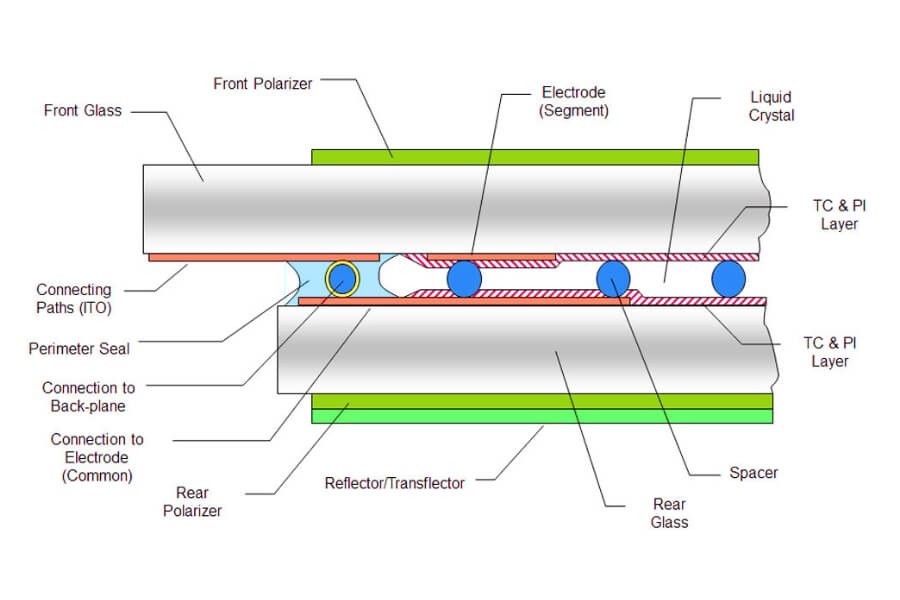
Structural Comparison
Segment LCD prioritizes simplicity and low power consumption. It minimizes controller complexity and reduces MCU workload.
Monochrome Graphic LCD increases interface flexibility. It supports menus, waveforms, multi-language text, and dynamic visual elements.
The correct choice depends on the type of information the device must communicate.
When Segment LCD Is the Right Engineering Decision
Segment LCD performs best when the displayed content is stable and repetitive.
Typical applications include smart meters, thermostats, industrial controllers, and battery-powered instruments. In these environments, simplicity directly improves long-term reliability.
Why Segment LCD Works in Industrial Systems
Ultra-low power consumption extends battery life. Minimal firmware requirements reduce development complexity. High sunlight readability ensures stable performance in outdoor environments.
For products expected to operate for many years without interface changes, Segment LCD provides stable lifecycle continuity.
When a Monochrome Graphic LCD Becomes Necessary
Once an interface requires variable data presentation, Segment LCD becomes restrictive.
Monochrome Graphic LCD supports flexible layouts and structured user interfaces while maintaining relatively low power consumption compared to full-color TFT panels.
Technical Trade-Offs
Segment LCD minimizes hardware and power load. Graphic LCD shifts complexity toward firmware and controller integration.
Graphic LCD becomes essential for medical monitors, diagnostic tools, and equipment requiring menu navigation or waveform visualization.
Device Interface vs Commercial Display – A Strategic Turning Point
Segment and Monochrome displays are optimized for device-level communication.
Commercial display systems are designed for spatial communication.
When a display transitions from internal data output to customer-facing interaction, brightness stability, viewing angle, installation structure, and lifecycle cost become primary decision factors.
This is no longer about controller efficiency. It is about audience visibility and engagement.
From Functional Modules to Commercial LCD Systems
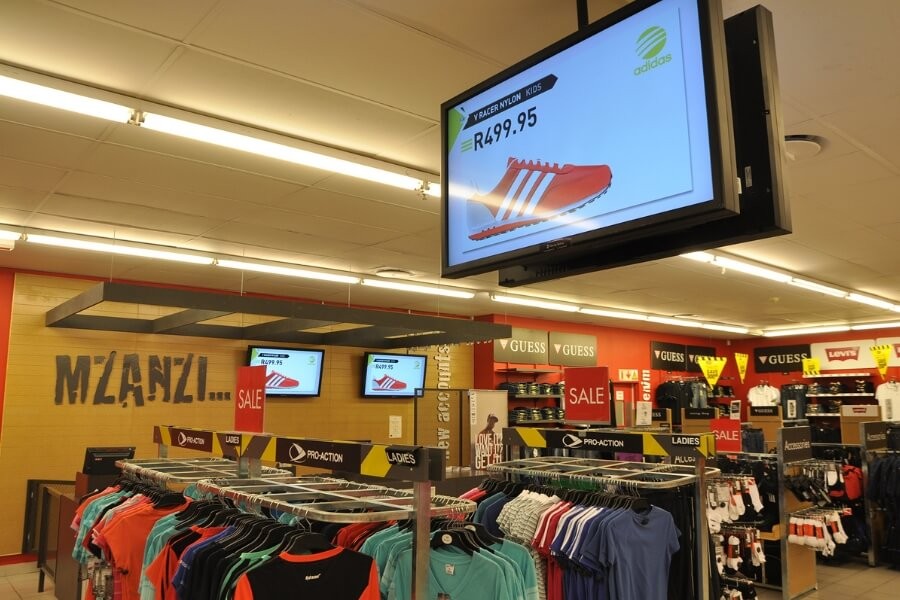
In retail stores, transportation hubs, corporate spaces, and exhibition halls, display systems must perform continuously under varying lighting conditions.
Commercial Indoor LCD panels provide higher brightness stability, wider viewing angles, and extended runtime reliability compared to industrial modules.
Thermal management and structural design ensure stable long-term operation.
At this stage, display becomes part of the business environment rather than a simple interface component.
When LED Video Walls Become the Logical Upgrade
As display size increases, traditional LCD panels face bezel and scalability limitations.
LED technology offers modular construction, seamless visual surfaces, and scalable installation flexibility.
Pixel Pitch determines optimal viewing distance. Smaller Pixel Pitch improves clarity for close viewing. Higher brightness supports high ambient light conditions.
LED systems are engineered for spatial visibility rather than compact integration.
Transparent Display Systems – Integrating Digital Content with Architecture
Transparent Display systems transform screens into architectural elements.
Instead of blocking space, they integrate into glass façades, storefronts, exhibition cases, and interior partitions.
Self-emissive Transparent OLED technology eliminates the need for a backlight layer. Higher Transparency preserves natural light flow while enabling digital overlay.
In commercial architecture, this improves spatial comfort and visual layering without sacrificing openness.
This is not simply a display upgrade. It is a shift in spatial design philosophy.
Strategic Display Evaluation Framework
Before selecting a display solution, define:
- Content complexity
- Power availability
- Environmental brightness
- Installation environment
- Lifecycle expectations
- Audience interaction level
If the application remains device-focused, Segment LCD or Monochrome Graphic LCD remains appropriate.
If the project becomes customer-facing, commercial display systems provide stronger impact and long-term value.
Display selection should align with business purpose, not just technical specification.
FAQ
Q1: What are the disadvantages of a 7 segment LED display?
7 segment LED displays are limited to numeric output and basic characters. They cannot support flexible graphics or detailed interface layouts. Power consumption is typically higher than LCD in continuous operation. Without proper brightness management, visibility may decrease under strong ambient light conditions.
Q2: What is the difference between a segment LCD and a monochrome graphic LCD?
A segment LCD displays fixed numbers and icons using predefined glass patterns. A monochrome graphic LCD uses a pixel matrix controlled by software. Segment LCD focuses on low power and simplicity, while graphic LCD provides layout flexibility and support for dynamic content.
Q3: Which type of LCD is best for industrial applications?
For stable numeric or status display, segment LCD offers lower power consumption and long-term reliability. For equipment requiring menus, multi-language text, or waveform display, monochrome graphic LCD provides better flexibility. The optimal choice depends on environmental conditions and lifecycle requirements.
Q4: Is LCD or LED better for eye comfort?
LED in commercial displays typically refers to LED-backlit LCD or direct-view LED systems. Eye comfort depends on brightness control, flicker performance, and light diffusion rather than the label itself. Proper brightness calibration and anti-glare treatment significantly improve visual comfort.
Q5: When should a project move beyond monochrome displays?
If the display becomes customer-facing or part of a commercial environment, commercial LCD, LED, or Transparent Display systems provide greater visibility and engagement. Higher brightness, wider viewing angles, and scalable installation improve spatial communication and long-term value.
RUSINDISPLAY supports businesses at every stage of display evolution, from reliable Indoor LCD systems to advanced LED Video Walls and large-format Transparent Display installations. When projects transition from device-level interfaces to commercial spatial communication, our engineering team provides scalable structural design, optimized brightness solutions, modular installation systems, and long-term technical support. We help transform display hardware into strategic visual infrastructure that strengthens brand presence and enhances real-world environments.