




Why Cold Temperatures Affect LCD Displays
In cold environments, the performance of liquid crystal displays can change noticeably. When temperatures drop below freezing, the physical properties of liquid crystal materials begin to shift, leading to slower response times, reduced contrast, and image retention. For applications such as outdoor advertising, transportation signage, and industrial control systems, cold-weather behavior becomes a critical design consideration rather than a minor visual issue.
Understanding how LCDs respond to low temperatures helps project teams evaluate display reliability, choose suitable panel specifications, and design systems that remain readable and stable throughout winter conditions.

What Actually Happens to an LCD Below Freezing
Slower Response Time and Screen Lag
Below 0°C, liquid crystal materials become more viscous, which slows molecular movement inside each pixel. As a result, response times increase significantly, and transitions between images take longer to complete. Dynamic content such as scrolling text or video may appear sluggish and less fluid than expected.
Lower Contrast and Faded Colors
Cold temperatures reduce the ability of liquid crystals to modulate light efficiently. This causes contrast levels to drop and colors to appear less saturated. Dark areas may look gray rather than deep black, reducing readability for information-driven displays in outdoor or transit environments.
Ghosting and Temporary Image Retention
As pixel recovery slows, previous images can linger briefly after a scene change. This ghosting or temporary image retention becomes more visible as temperatures fall. In most cases, these effects improve once the display returns to a warmer operating range.
Can Cold Temperatures Permanently Damage an LCD?
Short-term exposure to low temperatures typically results in performance degradation rather than immediate damage. However, extended exposure to extreme cold or repeated freeze-thaw cycles can stress both electronic and structural components.
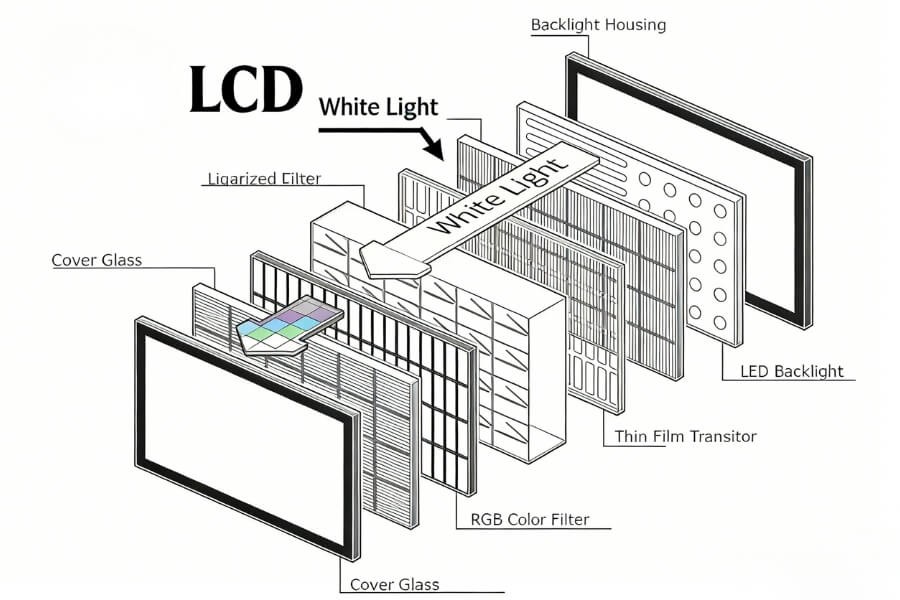
Driver circuits may operate less efficiently, while glass substrates, polarizers, and bonding layers contract at different rates. Over time, this can increase the risk of microcracks, delamination, or uneven backlighting. Whether permanent damage occurs depends on how far conditions exceed the display’s rated operating limits and how long those conditions persist.
Typical Temperature Limits for LCD Displays
LCD displays are designed with defined operating and storage temperature ranges. Standard commercial LCDs are generally intended for use above 0°C, while wide-temperature or industrial-grade LCDs often support operating ranges down to –20°C or –30°C.
It is important to distinguish between operating temperature and storage temperature. A display may tolerate cold storage but still fail to perform reliably if powered on below its specified operating limit.
How LCD Displays Are Designed to Work in Cold Environments
Wide-Temperature LCD Panels
Wide-temperature LCD panels use specialized liquid crystal formulations that maintain lower viscosity at reduced temperatures. These materials allow pixels to respond more consistently in cold environments. Panel designs may also optimize cell gap and electrode structure to stabilize electric field behavior as temperatures drop.
Integrated Heating Solutions
Heating systems are commonly used to maintain LCD performance in cold conditions. Transparent glass heaters can provide uniform warming across the panel surface, while flexible PET or polyimide heaters are often mounted behind the display or backlight assembly.
When paired with temperature sensors and controlled heating logic, these systems help keep the display within a functional temperature range without excessive power consumption or uneven heating.
Structural and Thermal Design Considerations
Cold-weather reliability depends on more than the panel itself. Durable optical adhesives, weather-resistant polarizers, and well-designed enclosures help maintain stable performance. Insulation, wind protection, and controlled heat flow reduce thermal loss, while larger systems must balance heating with normal heat dissipation to ensure long-term stability.
Where Cold-Resistant LCD Displays Are Commonly Used
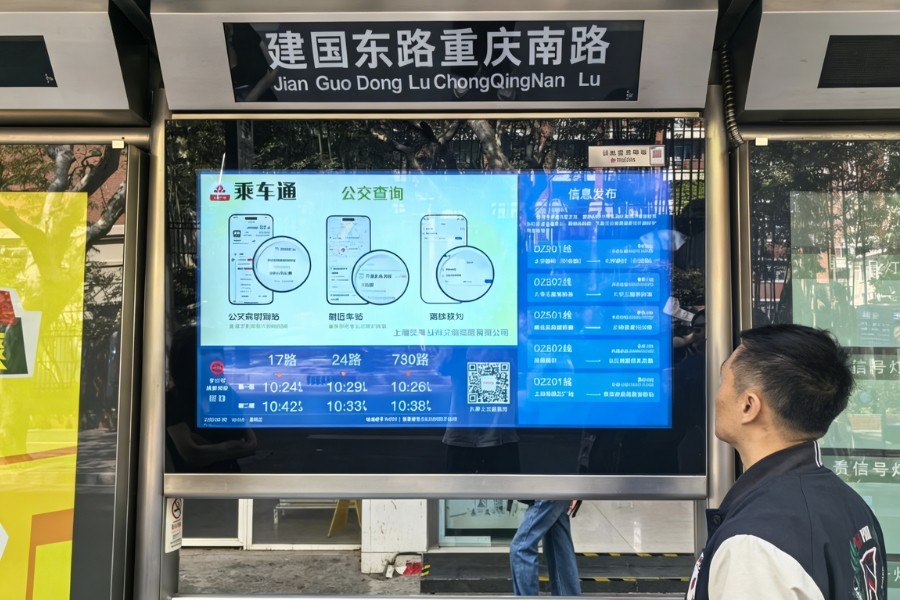
Cold-resistant LCD systems are widely used in outdoor digital signage and transportation displays, where year-round operation is required despite seasonal temperature changes. With proper thermal design, these systems continue to deliver readable content and remote management capabilities in winter conditions.
Industrial and logistics environments also rely on cold-resistant displays. In cold storage facilities, wide-temperature LCDs combined with sealed enclosures support reliable monitoring and control in sub-zero and high-humidity environments. Semi-outdoor retail spaces and building entrances benefit from similar solutions where environmental exposure varies throughout the day.
How to Choose the Right LCD Display for Cold Weather Projects
Selecting an LCD for cold environments begins with defining the lowest expected ambient temperature and how long the display will operate under those conditions. Project teams should determine whether integrated heating is acceptable and whether continuous operation is required.
Thermal design, power supply, and control systems should be planned as a single system to avoid cold spots or localized overheating. Before deployment, cold-start testing and temperature cycling validation are essential steps to confirm long-term reliability.
FAQ
Q1: What are the most common LCD issues in cold temperatures?
In cold environments, LCD displays often show slower response times, reduced contrast, faded colors, and visible ghosting. Dynamic content may appear sluggish, and image transitions can leave temporary afterimages. In extreme conditions, some displays may struggle to refresh or start properly until temperatures return to a functional range.
Q2: How can I tell if an LCD is rated for cold environments?
The most reliable method is to review the manufacturer’s specifications for the operating temperature range. Cold-rated or industrial LCDs clearly state minimum operating limits, such as –20°C or –30°C. Storage temperature ratings alone do not confirm reliable performance during active operation.
Q3: Do heaters reduce LCD lifespan?
When properly designed and controlled, integrated heating systems do not reduce LCD lifespan. Regulated heating can improve long-term reliability by preventing liquid crystal stiffening and structural stress caused by extreme cold. Temperature sensors and controlled heating logic help avoid overheating and uneven thermal exposure.
Q4: Are there better alternatives than LCD for extreme cold?
OLED displays generally respond faster at low temperatures but are more expensive and limited in large-format availability. E-Ink performs well in extreme cold but supports only static content. LCD remains a practical choice for many cold-weather applications when combined with wide-temperature panels and proper thermal management.
Q5: Does cold affect touch performance on LCD screens?
Yes. Capacitive touch sensitivity can decrease in low temperatures, leading to slower or less accurate input. For cold-weather installations, heated touch modules or infrared touch solutions are commonly used to maintain reliable interaction across changing environmental conditions.
About RUSINDISPLAY
RUSINDISPLAY provides professional LCD and Transparent OLED display solutions designed to perform reliably in challenging environments, including cold-weather and outdoor installations. Our experience with wide-temperature LCD modules, integrated heating designs, and system-level thermal management helps businesses maintain stable image quality, readable contrast, and long-term reliability when temperatures drop below standard operating ranges.
From outdoor digital signage and transportation displays to cold storage monitoring and semi-outdoor commercial spaces, RUSINDISPLAY supports projects with practical engineering insight, customized display systems, and consistent technical support from design through deployment.