




Why Polarizers Matter in LCD Display Performance
What a Polarizer Does in an LCD Display and Why It Is Essential
Polarizers are the core optical control elements in LCD technology. They function as optical filters that selectively transmit light waves in specific orientations, allowing precise control over reflection, transmission, and polarization states.
Without polarizers, the light modulation performed by liquid crystal molecules cannot be converted into visible images. An LCD panel without polarizers would be unreadable, regardless of backlight performance or resolution.
A standard LCD polarizer is a multilayer optical film composed of a surface protection layer, TAC layers, a PVA layer, a PSA adhesive layer, and a release film. The PVA layer absorbs iodine ions to achieve selective light absorption, forming the foundation of polarization behavior.
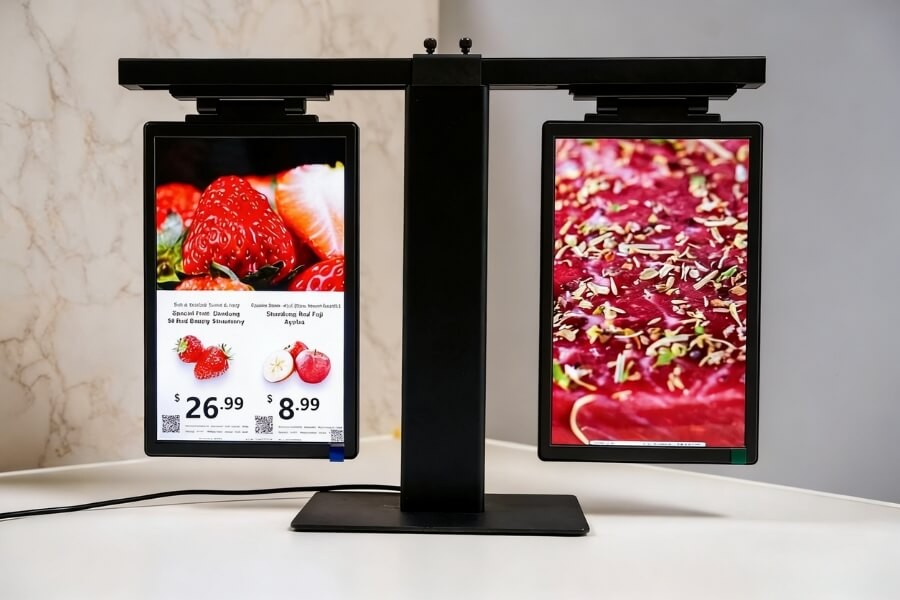
Where Polarizers Sit in an LCD Panel and How They Affect Image Quality
A conventional LCD adopts a sandwich-style structure. Two ITO-coated glass substrates encapsulate the liquid crystal layer, forming the active light-modulation region.
Polarizers are positioned on both sides of this structure. The front polarizer is mounted on the top glass and must always be transmissive. The rear polarizer is applied to the back of the bottom glass and can be selected based on application requirements.
Different liquid crystal technologies place varying demands on polarizer performance.
- TN displays offer low cost but limited viewing angles
- STN improves viewing angles with moderate cost
- FSTN enhances contrast and readability
- UWVD combines high brightness, wide viewing angles, and fast response
Each structure interacts differently with polarized light, influencing contrast, viewing angle stability, and brightness efficiency.
How Polarizers Influence Positive and Negative Display Modes
LCDs operate in either positive or negative display modes, and polarizer choice directly determines their performance characteristics.
Positive mode displays present dark content on a light background. They typically use reflective or transflective polarizers, rely heavily on ambient light, and offer low power consumption. This mode is well suited for outdoor or high-brightness environments.
Negative mode displays show light content on a dark background. They usually require transmissive polarizers and depend on backlight illumination. These displays deliver high contrast and wide viewing angles in controlled indoor environments where visual clarity is critical.
Mode selection should be based on ambient lighting, power constraints, contrast expectations, and viewing angle requirements.
Understanding Polarizer Types and When to Use Each One
Reflective, Transmissive, and Transflective Polarizers Explained
Reflective polarizers use ambient light to form images and perform best in strong lighting conditions. They require little or no backlight power and are commonly used in outdoor signage and battery-powered equipment.
Transmissive polarizers rely entirely on backlight transmission. They deliver the highest brightness in dark environments but consume more power and perform poorly under direct sunlight.
Transflective polarizers combine reflective and transmissive properties. They remain readable with or without backlight, making them suitable for environments with changing lighting conditions.
Choosing Polarizers for Large-Format and Commercial Display Systems
Special Polarizer Considerations for Video Walls and Digital Signage
Large-format systems impose additional constraints on polarizer selection.
Viewing angle consistency becomes critical in multi-panel configurations. Color and brightness uniformity must remain stable across different observation positions.
Ambient light management is another key factor, as commercial spaces experience varying lighting from artificial sources and daylight exposure.
Thermal stability and durability are essential for long-term high-brightness operation. Maintenance accessibility must also be considered, especially in modular display architectures.
These factors directly affect installation complexity, long-term color consistency, and maintenance cost in large-scale deployments.
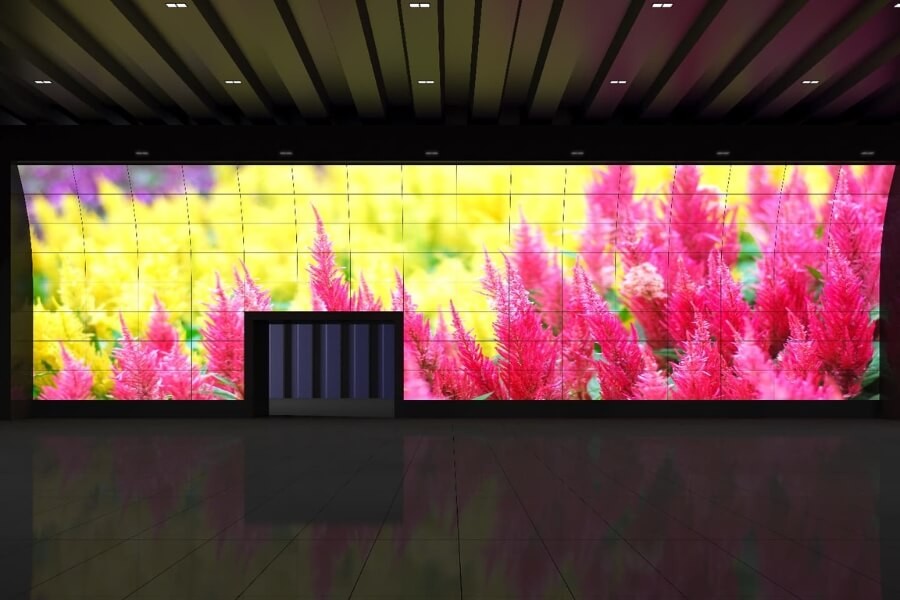
How RUSINDISPLAY Applies Polarizer Selection in Indoor LCD Systems
RUSINDISPLAY’s Freestanding Digital series is commonly used in retail and exhibition environments. These applications require wide viewing angles and high-transmittance polarizers to maintain consistent visibility across open spaces.
The Wall-mounted Digital series is typically exposed to controlled indoor lighting and reflective surfaces. Anti-reflection coated polarizers are selected to reduce glare and preserve contrast under ceiling and spotlight illumination.
The Interactive Digital series integrates touch functionality. Polarizer selection balances optical clarity, surface durability, and touch responsiveness to ensure reliable interaction over long-term use.
Matching Polarizer Choices to Real-World Display Applications
High-end retail displays benefit from transflective polarizers with anti-reflection coatings to ensure color saturation and wide viewing angles in mixed lighting environments.
Control rooms and monitoring centers require high-contrast transmissive polarizers optimized for long viewing durations and visual comfort.
Digital signage systems often adopt transflective or high-brightness transmissive polarizers to support daylight readability while controlling power consumption.
Interactive displays demand durable transflective polarizers with enhanced surface hardness and glare control to support frequent user interaction.
Key Performance Parameters to Consider When Selecting a Polarizer
Optical Metrics That Directly Affect Display Readability
Light transmittance typically falls between 40 percent and 60 percent. Higher values improve brightness efficiency but can reduce contrast, increasing calibration effort in multi-screen systems.
Lower transmittance raises backlight power demand, affecting energy consumption and thermal management over long operating hours.
Polarization efficiency above 99 percent ensures image clarity. Color accuracy depends on controlling chromatic shifts along the a-axis and b-axis.
Viewing angle performance must maintain consistent color and luminance across horizontal and vertical directions.
Durability and Environmental Resistance Requirements for Professional Displays
These durability requirements are critical for displays expected to operate continuously in commercial environments.
Professional systems require tight thickness tolerances, typically within ±0.03 mm. Thermal stability should be maintained between -30°C and 80°C without performance degradation.
High humidity resistance prevents whitening or bluing effects over time. UV resistance is essential for long-term exposure in bright or semi-outdoor installations.
A Step-by-Step Decision Process for Choosing the Right Polarizer
Selection begins with ambient lighting analysis. Strong light environments favor reflective or transflective polarizers, while controlled indoor spaces allow transmissive solutions.
Power constraints determine whether backlight dependency is acceptable. Display performance goals then define contrast, viewing angle, and color accuracy priorities.
Special requirements such as touch interaction, outdoor durability, or optical calibration further refine the final choice.
Common Polarizer Problems and How to Prevent Them
Why Polarizers Degrade in Real-World Operating Environments
UV exposure leads to yellowing and surface cracking. High temperature and humidity accelerate polymer degradation.
Chemical exposure damages surface coatings, while physical abrasion causes scratches and haze that reduce readability over time.
Diagnosing Color Shifts and Polarizer Aging Issues
Yellowing is primarily caused by UV exposure and oxidation and can be monitored through rising b-values.
Bluing occurs in high-temperature, high-humidity environments due to molecular instability.
Whitening results from moisture intrusion into the PVA layer and typically appears along panel edges.
Preventive measures include UV protection films, humidity control, reinforced edge sealing, and appropriate material selection.
Best Practices for Maintaining Polarizers in Professional Displays
Routine optical inspections should be performed every six to twelve months.
Environmental sensors can provide early warnings for abnormal operating conditions.
Cleaning procedures must use dedicated tools and approved agents.
Predictive replacement planning based on operating conditions helps prevent unexpected failures and downtime.
Emerging Polarizer Technologies and Industry Trends
How Intelligent and Adaptive Polarizers Are Evolving
Electrically controlled polarization enables dynamic privacy and shared-viewing modes.
Adaptive transmittance allows displays to respond automatically to changing ambient lighting.
Sensor integration reduces module thickness and simplifies system architecture.
The Role of AI in Optimizing Display Optics
AI-driven content analysis dynamically optimizes polarization parameters based on displayed content.
Viewer-position awareness improves group viewing experiences in public spaces.
Predictive maintenance analyzes degradation trends before visible failure occurs. These developments mainly influence long-term upgrade planning rather than immediate deployment.
Polarizer Design Challenges in Transparent Display Systems
High-transparency polarizers now achieve over 80 percent light transmission while maintaining polarization control.
Selective polarization enables intelligent switching between transparent and display regions.
RUSINDISPLAY integrates advanced polarizer solutions into transparent OLED systems to balance image visibility and architectural transparency.
Sustainability and Modular Design in Future Display Optics
Modular polarizer designs enable independent upgrades and replacements, extending system life cycles.
Recyclable materials help reduce electronic waste.
Improvements in polarizer efficiency can lower overall display system energy consumption by more than 30 percent over long-term operation.
Professional Integration Considerations for Display Projects
What to Evaluate During the Display Planning Stage
Environmental assessments should analyze lighting conditions, temperature, humidity, viewing distance, and angles.
Content types and viewer behavior influence display performance requirements.
Lifecycle planning defines maintenance schedules, upgrade paths, and expected service life.
How RUSINDISPLAY Supports Professional Polarizer Integration
RUSINDISPLAY approaches polarizer integration from a system perspective. Selection is based on lighting analysis, viewing distance, content type, and long-term maintenance strategy rather than isolated component specifications.
LCD and transparent OLED technologies are applied in a complementary manner to achieve consistent optical performance across different display formats. Hardware characteristics and content design are developed in parallel to ensure predictable visual outcomes throughout the system lifecycle.
Evaluating Total Cost of Ownership for Polarizer Selection
Initial investment includes polarizer type selection and customization requirements.
Operating costs reflect energy consumption, calibration workload, and maintenance frequency.
Performance improvements reduce downtime, extend replacement cycles, and improve overall business value. Intangible benefits include enhanced brand perception and user experience.
FAQ
Q1: How can performance and cost be balanced in large commercial display projects?
A lifecycle-based approach works best. High-performance polarizers reduce maintenance frequency and extend service life, lowering long-term costs. Modular display systems allow phased upgrades, helping spread investment over time while maintaining consistent visual performance.
Q2: How is visual consistency ensured across video wall units?
Consistency requires polarizers sourced from the same production batch and pre-matched through optical measurements such as luminance, color coordinates, and viewing angle behavior. Factory-level calibration further improves uniformity after on-site installation.
Q3: What are the special requirements for polarizers used in interactive displays?
Interactive displays require anti-glare coatings, fingerprint resistance, and surface hardness above 3H to withstand frequent contact. Reliable optical bonding is essential to maintain touch accuracy and image clarity over long-term use.
Q4: How should outdoor durability of LCD polarizers be evaluated?
Outdoor durability should be verified through UV aging, thermal shock, humidity cycling, and salt spray testing when applicable. Ingress protection and edge sealing are critical to prevent moisture-related color shift and contrast degradation.
Q5: What makes polarizers for transparent display systems unique?
Transparent displays require extremely high light transmittance while preserving polarization. Polarizers must be optically matched with transparent electrodes and encapsulation layers to minimize reflection and maintain clarity without compromising transparency.