




How Display Technology Is Changing the Museum Experience
Museums are no longer defined by static collections alone. They are becoming immersive environments where storytelling, interaction, and spatial design shape how visitors engage with culture and history. In this shift, display technology and visual effects play a structural role rather than a decorative one.
The real value of museum display technology lies in supporting clear narratives, encouraging participation, and addressing physical and environmental limitations. When applied correctly, technology strengthens interpretation without distracting from the artifacts themselves.
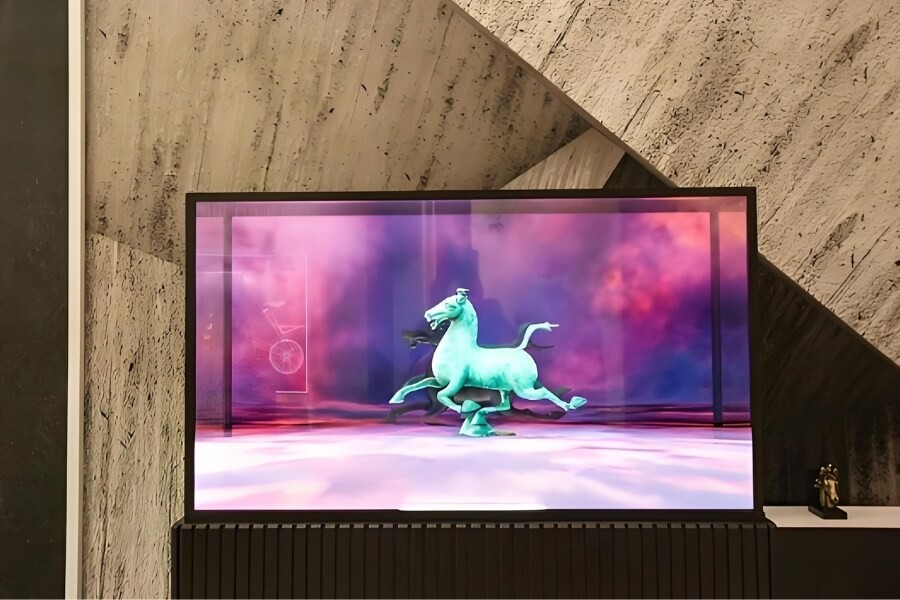
Core Challenges and Practical Responses
Modern museums face several interconnected challenges.
- Attracting younger, digitally fluent audiences
- Increasing interaction without overwhelming visitors
- Managing ambient light while preserving visibility
- Using exhibition space efficiently
- Understanding visitor behavior and engagement
Addressing these challenges requires an integrated approach. Interactive displays, immersive media, adaptive visual systems, and data-driven tools must function as a unified experience layer rather than isolated installations.
A RUSINDISPLAY Perspective
At RUSINDISPLAY, we see future museum display systems as transparent, intelligent, and interactive. Technology should act as a transparent canvas, blending into the space so that content and artifacts remain the focus.
Key Display Technologies Used in Museums Today
Transparent Displays – Adding Digital Layers Without Blocking Artifacts
Transparent displays based on self-emissive technologies such as OLED allow digital content to coexist with physical objects. With transparency levels typically between 40 and 70 percent, information appears to float in front of artifacts without blocking sightlines or ambient light.
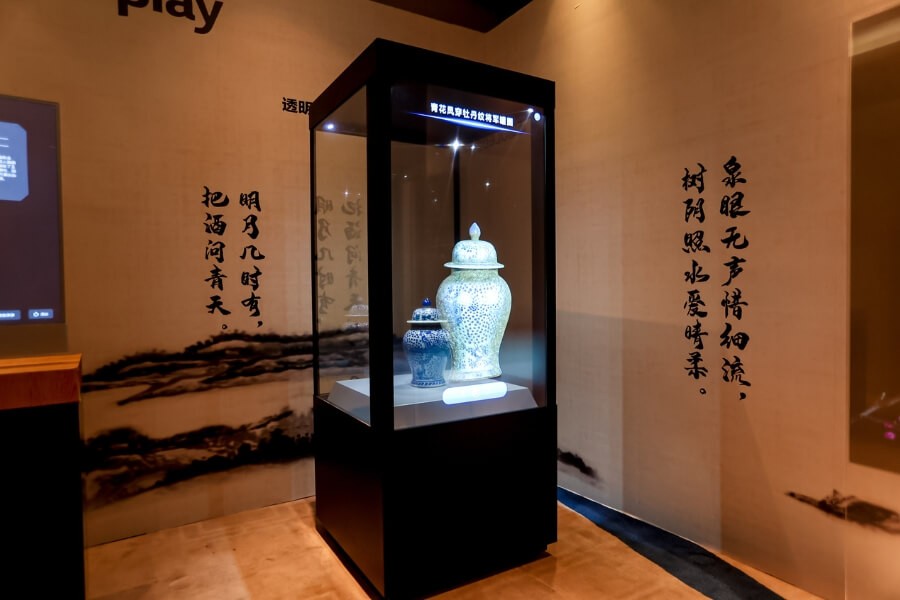
Where Transparent Displays Are Used in Museums
- Enhanced Display Cases Transparent screens integrated into glass showcases protect fragile artifacts while overlaying interpretive text, animations, or reconstructions, enabling layered viewing.
- Spatial Partitioning and Wayfinding Used as transparent information panels, these displays communicate guidance without visually closing off spaces.
- Narrative Windows Embedded within walls or architectural openings, transparent screens support storytelling that blends physical space with digital content.
In practice, transparent display systems require more than panel selection. Thickness control, brightness balance, and modular scalability determine whether a display integrates naturally. RUSINDISPLAY develops ultra-thin Transparent OLED displays and modular transparent video walls designed for spatial integration and interaction.
Immersive Projection and Visual Effects for Exhibition Spaces
Immersive and projection-based systems surround visitors with visual narratives or activate physical forms through motion-responsive content.
- Immersive Projection Environments 360-degree projection and CAVE systems are used for historical scenes, natural phenomena, and abstract interpretation.
- Interactive Projection Mapping Dynamic visuals mapped onto sculptures or architecture respond to visitor movement.
- Holographic and Floating Visual Effects Techniques such as Pepper’s Ghost create the illusion of floating figures or objects.
- Ultra-Short Throw Projection and Digital Glass Designed for bright environments, these systems support high-contrast, large-format visuals.
These technologies are commonly used for themed exhibition rooms, large-scale models, entrance experiences, and high ambient light areas.
Interactive Touch Displays That Encourage Exploration and Learning
Interactive touch systems enable visitors to explore content at their own pace.
- Large Interactive Touch Screens and Walls Support multi-user interaction, digital archives, and educational content.
- Interactive Multi-Touch Tables Object recognition triggers 3D models, animations, or narratives, encouraging collaborative learning.
- Touch Integrated Into Other Display Media Touch functionality can be combined with transparent displays or smart glass for intuitive interaction.
These systems replace static panels and support exploration without reliance on guided tours.
AR, VR, and AI – Creating Personalized Museum Experiences
Extended reality and AI technologies expand how museums present content.
- Augmented and Mixed Reality Digital layers appear over physical exhibits through mobile devices or AR glasses.
- Virtual Reality VR enables fully immersive experiences beyond physical limitations.
- Artificial Intelligence AI supports virtual guides, personalized recommendations, and adaptive content delivery.
These tools enable personalized exploration and access to otherwise unreachable content.
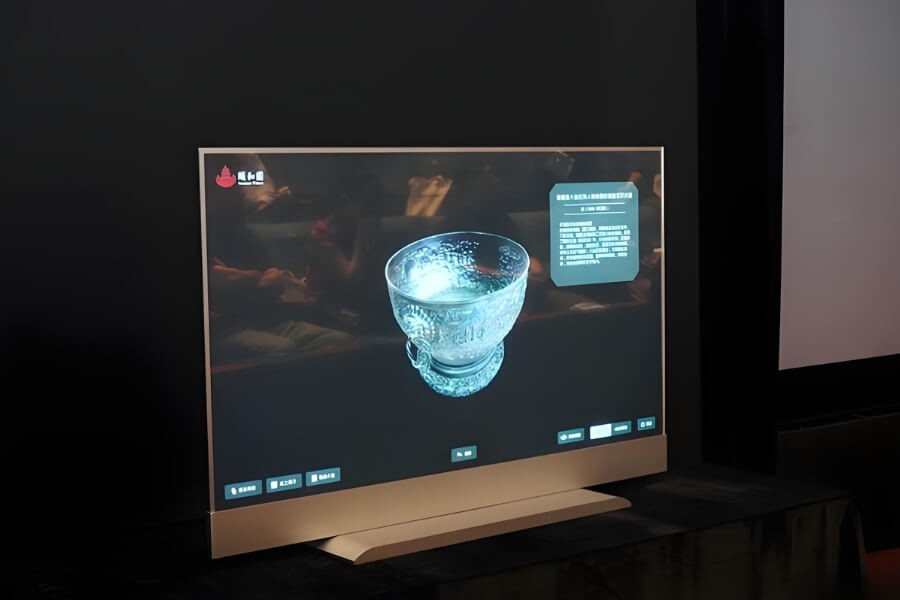
Display Technologies Designed for Bright and Complex Museum Environments
Some exhibition spaces demand specialized display solutions.
- High-Brightness and ALR Displays Maintain clarity in atriums and window-facing areas.
- Switchable Smart Glass Protects sensitive exhibits while enabling reveal-based storytelling.
- Large-Scale LED Video Walls Deliver high brightness and seamless scale for landmark installations.
These technologies resolve lighting conflicts and enable flexible spatial design.
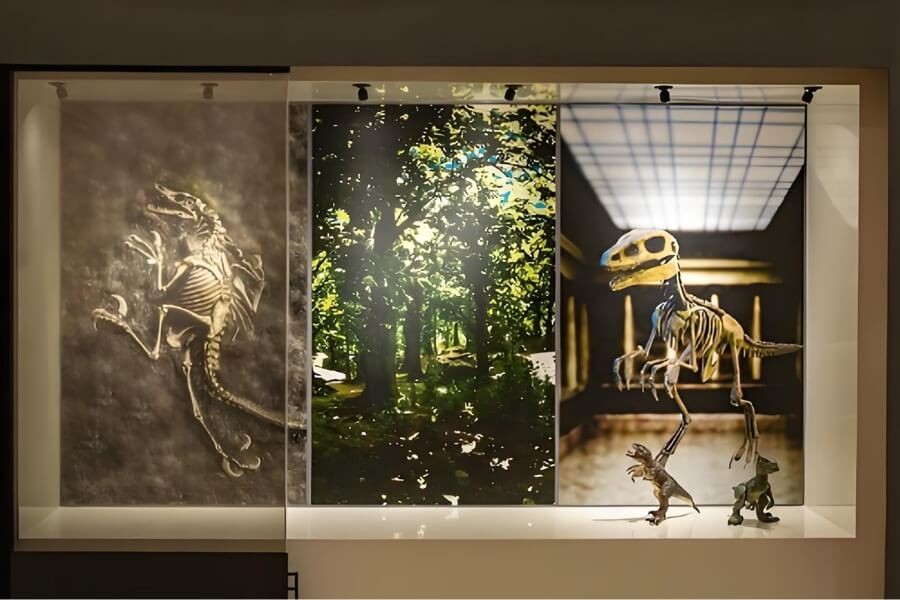
How to Integrate Display Technology Into a Museum Successfully
Start With the Story, Not the Technology
Display systems should support the exhibition narrative and address specific interpretive needs.
Designing Visitor Flow and Attention Balance
Interactive, immersive, and static elements should be sequenced to maintain engagement and avoid fatigue.
Using Visitor Data to Improve Exhibitions
Anonymous analytics such as heat maps and dwell-time tracking help refine layouts and content.
Planning for Maintenance, Updates, and Long-Term Use
- Content updates should be efficient
- Hardware must support continuous operation
- Systems should allow future upgrades
RUSINDISPLAY supports museums as an integration partner, aligning transparent display systems, interaction logic, and long-term operational needs.
What’s Next for Museum Display Technology
Museum displays are increasingly integrated into architecture, becoming visually discreet while remaining functionally powerful. AI-driven personalization and cross-platform experiences will continue to shape how visitors engage with exhibitions.
RUSINDISPLAY’s Approach to Future Museum Displays
RUSINDISPLAY continues to advance Transparent OLED display systems with a focus on flexibility, transparency, and intelligent interaction. Our goal is to support museums in presenting cultural narratives clearly while preparing for future exhibition needs.
FAQ
Q1: What display technologies are most commonly used in modern museums?
Modern museums typically combine multiple display technologies, including Transparent OLED displays, interactive touch screens, immersive projection systems, LED video walls, and environment-adaptive displays. Each technology supports a different function, such as artifact interpretation, immersive storytelling, wayfinding, or large-scale visual impact. Successful projects usually integrate several systems rather than relying on a single display type.
Q2: Are Transparent OLED displays suitable for displaying valuable or fragile artifacts?
Yes. Transparent OLED displays are suitable for valuable or fragile artifacts because they overlay digital content without blocking the physical object. When integrated into display cases, they support layered interpretation while preserving visibility, lighting balance, and physical protection. This approach allows museums to add context and storytelling without altering or distracting from the original exhibit.
Q3: How do museums manage high ambient light when using digital displays?
Museums manage high ambient light by selecting display technologies designed for bright environments, such as high-brightness screens, Ambient Light Rejecting projection surfaces, LED video walls, or Ultra-Short Throw projection systems. The optimal solution depends on window exposure, lighting design, and viewing distance. Matching display performance to environmental conditions ensures content remains clear and readable.
Q4: Do interactive displays require constant staff supervision?
No. Most interactive displays are designed for self-guided use. Touch screens, interactive tables, and sensor-based installations allow visitors to explore content independently and at their own pace. Clear interface design and intuitive interaction reduce the need for staff supervision while maintaining engagement, accessibility, and smooth visitor flow throughout the exhibition space.
Q5: How often does digital exhibition content need to be updated?
Content update frequency depends on the exhibition type and curatorial goals. Permanent exhibitions may update content periodically, while temporary or rotating exhibitions often require more frequent changes. Systems that support centralized content management enable efficient updates without hardware modification, helping museums maintain relevance while minimizing operational disruption.
Q6: What should museums consider when planning long-term maintenance?
Long-term planning should consider hardware reliability, content management workflows, system scalability, and access to technical support. Modular display systems simplify maintenance and future upgrades while reducing downtime. Working with experienced partners who understand exhibition lifecycles helps museums keep display systems stable, adaptable, and cost-effective over extended periods.