




Why Interactive Window Displays Are Changing Physical Spaces
Interactive window displays are becoming a critical tool for physical retail and commercial environments. As online shopping reshapes customer behavior, traditional storefronts must work harder to attract attention and encourage in-person engagement.
At the same time, non-contact and interactive display technologies are redefining how glass surfaces are used. Touch interaction, dynamic visuals, and transparent display systems allow windows to function as both architectural elements and digital interfaces.
An interactive window display does more than present content. It turns glass into an interactive layer that increases dwell time, supports exploration, and creates a clearer connection between digital information and the physical space behind it.
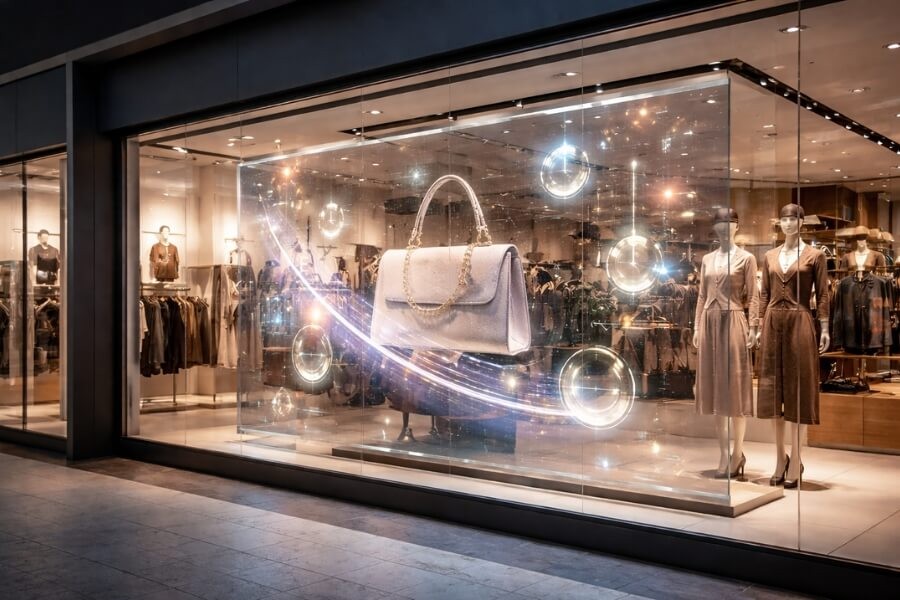
Interactive Window Display Technologies – What Are the Real Options
Interactive Window Displays can be built using several different technologies. Each option serves a specific purpose depending on budget, lighting conditions, installation constraints, and the level of visual integration required.
Touch Foil – Fast Retrofits for Existing Windows
Touch foil enables touch interaction through glass using PCAP technology.
- Commonly used for retail windows, showrooms, and menu displays
- Easy to install on existing glass surfaces
- Supports multi-touch input with high optical transparency
This solution is well suited for projects that require quick deployment without replacing existing display hardware.
Interactive Projection Film – Flexible Interaction with Projection
Interactive projection film combines rear projection with a touch-sensitive surface.
- Suitable for creative interactive window displays and transparent storefronts
- Performs well in controlled lighting environments
- Allows large interactive surfaces without fixed display panels
Because projection quality depends on ambient light and alignment, this approach is often selected for temporary installations or experimental concepts.
Transparent LED Displays – High-Brightness Large-Scale Windows
Transparent LED Displays integrate LED modules into a see-through structure.
- Designed for large storefronts, shopping malls, and exhibition spaces
- Deliver high brightness for long-distance visibility
- Support modular expansion for large-format windows
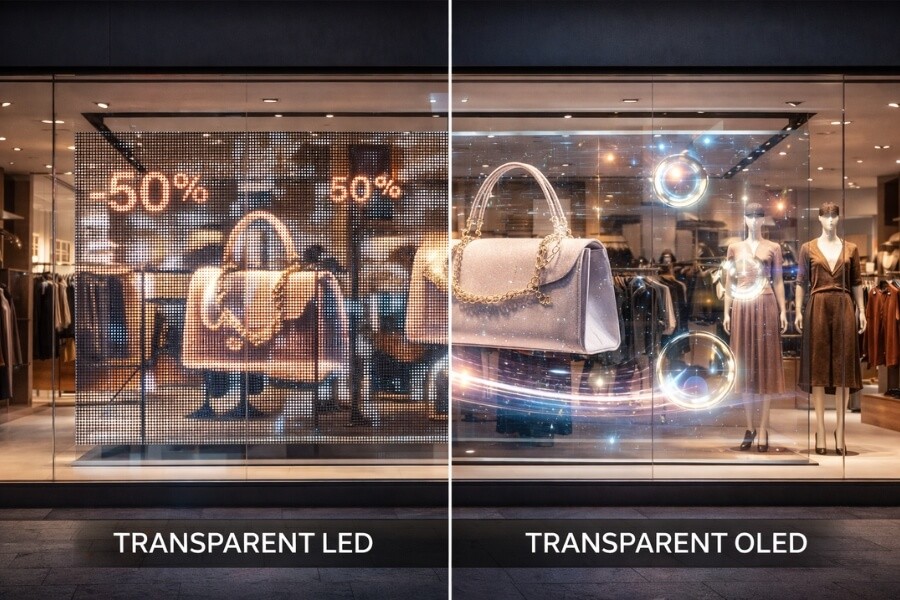
Compared to Transparent OLED Displays, Transparent LED solutions provide higher brightness but lower transparency and increased structural depth.
Transparent OLED Displays – Native Transparency with Image Quality
Transparent OLED Displays use self-emissive pixels without a backlight.
- Ideal for high-end retail, automotive showrooms, museums, and smart environments
- Maintain transparency while delivering stable image quality
- Enable ultra-thin and embedded display designs
Because pixels emit light independently, Transparent OLED Displays avoid the image distortion and alignment limitations found in projection-based systems.
Smart Glass – Dynamic Transparency Without Direct Interaction
Smart glass adjusts transparency through electrical control.
- Often used in architectural facades and privacy-focused spaces
- Supports transparent and opaque states without additional displays
- Typically requires projection or overlays to enable interaction
Smart glass is commonly combined with interactive display systems rather than used alone.
Why Transparent OLED Is Redefining Interactive Window Design
Transparent OLED Technology represents a shift from add-on interaction to native display integration. Instead of placing content on top of glass, the display becomes part of the glass itself.
What Makes Transparent OLED Different in Real Projects
- Transparency levels typically range between 40 and 50 percent
- Self-emissive structure removes the need for backlight systems
- Ultra-thin profiles support embedded and frameless installation
- Consistent image quality across viewing distances
- Lower power consumption compared to LED-based transparent displays
When transparency, image stability, and architectural integration are equally important, Transparent OLED Displays provide the most direct solution.
Where Transparent OLED Works Best
Retail Windows
Digital content overlays products without blocking visibility, allowing customers to see both information and merchandise at the same time.
Automotive Showrooms
Transparent OLED Displays support AR-style visualization of vehicle components and configuration options without physical disassembly.
Museums and Art Exhibitions
Artifacts remain visible while digital narratives, animations, and contextual information appear on the same visual plane.
Smart Homes
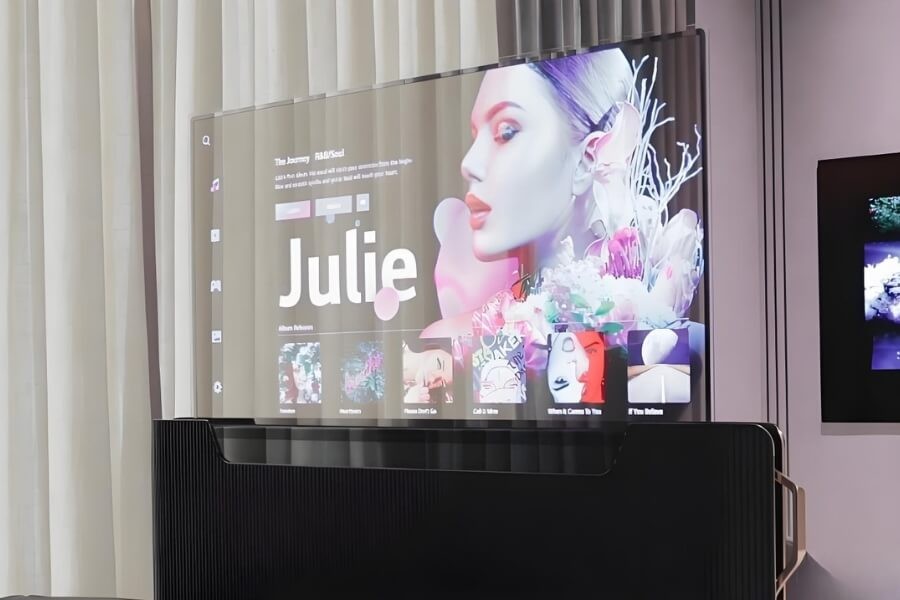
Transparent televisions, interactive mirrors, and intelligent windows combine display technology with daily living environments.
Control Rooms and Command Centers
Operational data can be displayed over real-world views, helping operators maintain spatial awareness while monitoring information.
In practice, the effectiveness of Transparent OLED Displays depends on how well display hardware, interaction technology, and spatial design work together.
RUSINDISPLAY focuses on Transparent OLED display systems developed for commercial environments where transparency, interaction, and architectural intent must remain aligned.
How to Choose the Right Interactive Window Technology
Choosing the right Interactive Window Display depends on project priorities rather than specifications alone.
| Project Requirement | Recommended Technology |
|---|---|
| Fast deployment with limited budget | Touch foil with existing displays |
| Transparent interaction in bright environments | Interactive projection film |
| Large-format windows with high brightness | Transparent LED Displays |
| Premium experience with maximum transparency | Transparent OLED Displays |
| Adjustable visibility and privacy | Smart glass combined with display systems |
If visual clarity, transparency, and long-term integration are critical, Transparent OLED Displays are the most appropriate choice.
From Concept to Installation – How Interactive Windows Are Implemented
Interactive Window Displays perform best when planned as part of the space, not added as an afterthought.
Defining Goals and User Interaction
Project teams should first clarify interaction objectives, target audiences, and content requirements.
Selecting the Right Technology for the Environment
Lighting conditions, window size, transparency expectations, and installation constraints all influence technology selection.
Integrating Hardware, Software, and Content
- Display panels, sensors, and control hardware
- Content management platforms and interaction logic
- Visual content, animation, and interface design
Testing Performance and User Experience
Touch accuracy, brightness balance, and interaction flow should be tested under real conditions.
Maintaining and Updating the System
Remote content updates and routine system checks support long-term reliability.
RUSINDISPLAY supports Transparent OLED projects from system design to integration, ensuring display technology fits both the space and its intended use.
What’s Next for Interactive Window Displays
Interactive Window Display Technology continues to evolve.
- Higher transparency and flexible OLED structures will support curved architectural glass
- AI-driven interaction will enable adaptive, context-aware content
- IoT integration will connect displays with lighting, audio, and building systems
- Energy-efficient designs will align with sustainability goals
RUSINDISPLAY continues to develop Transparent OLED solutions for commercial, cultural, and lifestyle environments. By treating displays as part of the space rather than separate devices, interactive windows can deliver information without disrupting the environment they occupy.

FAQ
Q1: What is an interactive window display?
An interactive window display turns a glass surface into a digital interface that responds to touch, gestures, or motion. It allows users to explore content directly on storefronts or glass partitions while maintaining visibility into the space behind the display. These systems are commonly used in retail, exhibitions, and commercial environments.
Q2: How can an existing glass window be made interactive?
Existing windows can be upgraded using touch foil or interactive projection film applied directly to the glass. These solutions detect touch through the surface and connect to an external display system. This approach avoids structural changes and is often chosen for fast deployment or temporary interactive window installations.
Q3: What makes Transparent OLED displays different from projection-based solutions?
Transparent OLED displays generate images directly within the glass using self-emissive pixels, while projection-based systems rely on external projectors. This results in more stable image quality, better contrast, and fewer alignment issues. Transparent OLED technology is better suited for permanent installations where visual clarity and spatial integration are critical.
Q4: Are Transparent OLED displays visible in bright indoor environments?
Yes. Transparent OLED displays offer sufficient brightness for most indoor commercial spaces. When combined with anti-reflective coatings and proper content design, they remain clearly visible even under strong ambient lighting. For outdoor or direct sunlight conditions, additional brightness planning and shading strategies may be required.
Q5: Do interactive window displays support multi-touch or glove interaction?
Most interactive window systems support multi-touch input, often allowing ten or more simultaneous touch points. Capacitive touch solutions can also be configured for glove compatibility, which is useful in public or hygienic environments where direct skin contact is not always possible.
Q6: How complex is installation and long-term maintenance?
Installation complexity depends on the technology used. Touch foil and projection systems are relatively simple to deploy, while Transparent OLED displays require precise integration and structural planning. Long-term maintenance typically focuses on content updates and system checks rather than frequent hardware replacement.
Q7: Can Transparent OLED displays be customized for different projects?
Yes. Transparent OLED displays can be customized in size, aspect ratio, and configuration to match specific architectural or display requirements. Modular designs also allow multiple panels to be combined for wider interactive windows or integrated into non-standard glass structures.